 Aayush Gupta
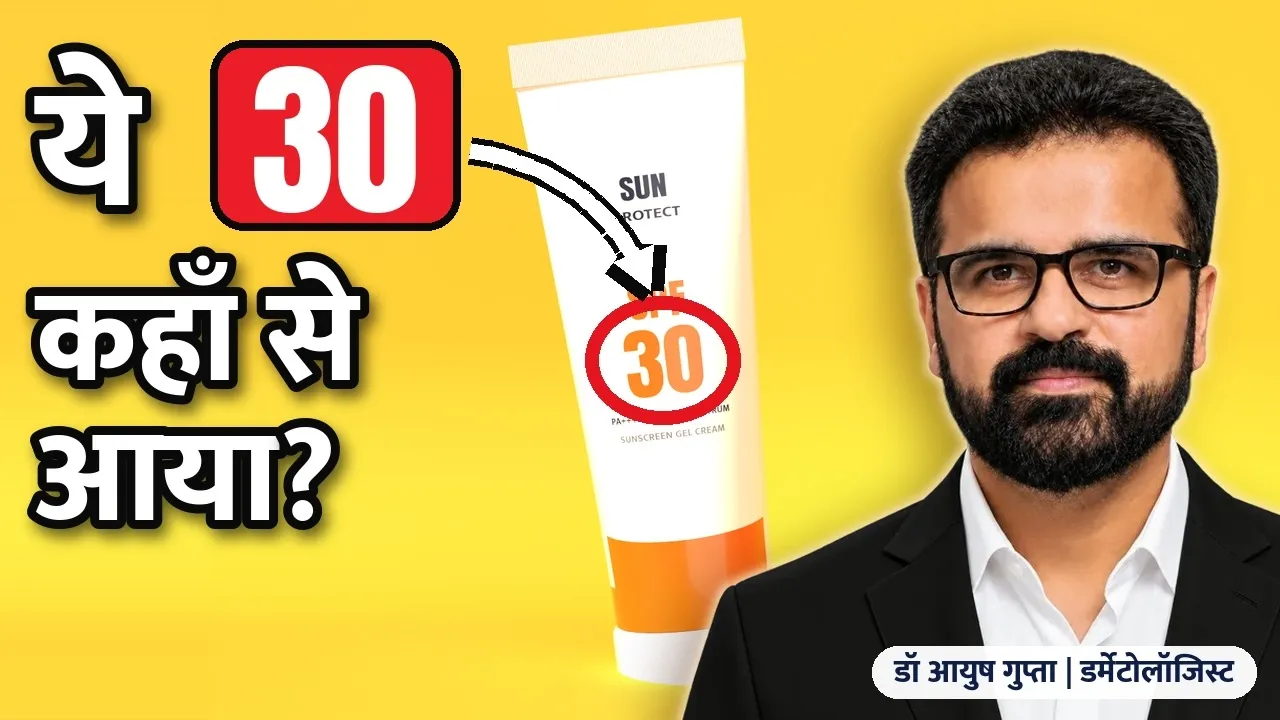
SPF 30 का असल मतलब क्या है?
How much protection melanin and a tan give, how the SPF on a sunscreen is measured, and which mark on the tube covers UVA.
Chapters
- 0:00 Skin ka apna sunscreen
- 0:20 Melanocytes aur melanin ki cap
- 0:52 Brown skin ko bhi sunscreen kyun
- 1:00 Pehli wajah: tanning der se
- 1:23 Doosri wajah: protection kam
- 1:37 SPF kaise naapte hain
- 2:13 SPF 15, 30 aur 50 kitna rokte hain
- 2:41 UVA aur doosra nishaan
- 3:03 Apni sunscreen check kijiye
Aapki skin ke andar lakhon cells apne DNA ke upar melanin ka ek chhota sa umbrella pakde hue hain. Yeh film dikhati hai ki yeh natural sunscreen kya kar sakta hai aur kya nahi: melanin kahan banta hai, har cell use dhoop wali taraf cap ki tarah kaise pehenta hai, tanning der se kyun hoti hai aur kam kyun bachati hai, aur lab mein SPF kaise naapte hain, SPF 15, 30 aur 50 kitni rays andar aane dete hain, aur UVA ke liye tube par doosra nishaan kaun sa hai.
- Topic
- Melanin, tanning and the SPF label
- Reviewed by
- Dr Aayush Gupta
- Published
- 19 October 2026
- Languages
- Hindi
- Related research
- Vitiligo and pigment biology
- On YouTube
- Watch on YouTube ↗
The explanation
Patients with brown skin often ask why they need sunscreen when their skin already tans rather than burns. The question is reasonable, because melanin does protect the skin, and the answer depends on how much protection constitutive melanin gives, how much a tan adds and what the SPF on a label actually measures. This page accompanies a short film for patients and sets out the evidence behind its statements.
Melanin as a cap over the nucleus
Melanocyte density is similar across skin types, so the difference in colour lies in how much melanin each melanocyte makes rather than in the number of cells (Tadokoro et al., 2005). Darker skin contains about twice as much epidermal melanin as lighter skin (Alaluf et al., 2002). Melanocytes transfer melanin to the surrounding keratinocytes, which gather it into supranuclear caps on the side of the nucleus that faces the surface. Keratinocytes with these caps show less ultraviolet damage to their DNA than keratinocytes without them (Kobayashi et al., 1998).
Constitutive melanin is a real but partial shield. In skin samples, about five times as much ultraviolet radiation reached the upper dermis of white skin as of black skin (Kaidbey et al., 197970018-1)). Brown skin therefore receives less ultraviolet radiation in the dermis, although it still receives some.
Why a tan protects late and little
Facultative pigmentation is a response to damage that has already occurred. Ultraviolet radiation forms cyclobutane pyrimidine dimers in DNA within picoseconds of exposure (Premi et al., 2015). The tanning response follows this damage, because p53 activated in damaged keratinocytes drives the production of the hormone that signals melanocytes to make more melanin (Cui et al., 2007). A tan is therefore evidence of DNA damage rather than a defence that precedes it.
The protection that a tan adds is also small. In volunteers of skin types II and IV, a tan induced over two weeks protected only about twice as well as untanned skin, and the gain was similar in both skin types (Sheehan et al., 2002). UVB is the main cause of sunburn, whereas UVA reaches the dermis and is filtered less by windows and clouds (Salih et al., 2024).
How SPF is measured
The SPF is a ratio of doses measured on volunteers. The reference test finds the minimal erythema dose, which is the smallest ultraviolet dose that produces perceptible redness with clearly defined borders 16 to 24 hours after exposure. The test is repeated on skin covered with the sunscreen at 2 mg/cm², and the SPF is the dose needed on protected skin divided by the dose needed on unprotected skin (21 CFR 201.327). The same regulation tests volunteers of skin types I to III only.
The fraction of erythemal radiation that passes through a correctly applied layer is the reciprocal of the SPF. SPF 15 therefore transmits about 7 of every 100 rays that cause erythema, SPF 30 about 3 and SPF 50 about 2. Since the SPF is a ratio of doses, it does not translate into a fixed time outdoors, and the noon sun delivers the threshold dose much faster than the morning sun.
UVA and the second label mark
The SPF reflects protection against erythema, which comes mostly from UVB, so a second mark is needed for UVA. In the United States, a product may be labelled broad spectrum only if its mean critical wavelength is 370 nm or more (21 CFR 201.327). The Japanese PA system grades the UVA protection factor, measured by persistent pigment darkening, as PA+ for 2 to under 4, PA++ for 4 to under 8, PA+++ for 8 to under 16 and PA++++ for 16 or more (JCIA).
Applied amount
Every labelled value assumes 2 mg/cm². Under natural conditions people apply about 0.39 to 1.0 mg/cm², which lowers the protection they receive considerably (Petersen and Wulf, 2014). The film closes on this gap, and the next film in the series examines how much of the labelled SPF a patient receives at the amounts people actually apply.
Sources
- Tadokoro T et al. J Invest Dermatol 2005. doi:10.1111/j.0022-202X.2005.23760.x
- Alaluf S et al. Pigment Cell Res 2002. doi:10.1034/j.1600-0749.2002.1o071.x
- Kobayashi N et al. J Invest Dermatol 1998. doi:10.1046/j.1523-1747.1998.00178.x
- Kaidbey KH et al. J Am Acad Dermatol 1979. doi:10.1016/s0190-9622(79)70018-1
- Premi S et al. Science 2015. doi:10.1126/science.1256022
- Cui R et al. Cell 2007. doi:10.1016/j.cell.2006.12.045
- Sheehan JM et al. J Invest Dermatol 2002. doi:10.1046/j.1523-1747.2002.01681.x
- Salih M et al. Skin Health Dis 2024. doi:10.1002/ski2.432
- Petersen B, Wulf HC. Photodermatol Photoimmunol Photomed 2014. doi:10.1111/phpp.12099
- 21 CFR 201.327. ecfr.gov
- JCIA SPF and PA notification. jcia.org
Transcript
पूरा नैरेशन पढ़ें
आपकी स्किन के अंदर लाखों सेल्स अपने DNA के ऊपर एक छोटा सा अम्ब्रेला पकड़े हुए हैं। ये अम्ब्रेला मेलानिन से बना है, वही पिगमेंट जो आपकी स्किन को उसका कलर देता है। पर ये अम्ब्रेला आपको कितना बचा रहा है? और आपकी टैनिंग आपको क्या बता रही है?
मेलानिन को स्किन के पिगमेंट सेल्स बनाते हैं, जिन्हें मेलानोसाइट्स कहते हैं। स्किन गोरी हो या ब्राउन, मेलानोसाइट्स की गिनती लगभग बराबर होती है। फ़र्क बस इतना है कि ब्राउन स्किन में ये ज़्यादा मेलानिन बनाते हैं। ये मेलानिन आसपास के सेल्स तक पहुँचता है, और हर सेल इसे अपने DNA के ऊपर, धूप वाली तरफ़, एक कैप की तरह पहन लेता है। जिन सेल्स ने ये कैप पहनी होती है, उनके DNA को कम नुकसान होता है।
फिर भी डर्मेटोलॉजिस्ट हर किसी को, ब्राउन स्किन वालों को भी, सनस्क्रीन लगाने को कहते हैं। इसकी दो वजहें हैं।
पहली वजह, मेलानिन तो स्किन में हमेशा रहता है, पर टैनिंग वाला एक्स्ट्रा मेलानिन देर से बनता है। UV रेज़ पलक झपकते ही DNA को डैमेज कर देती हैं, और स्किन उसके बाद ही ज़्यादा मेलानिन बनाना शुरू करती है। तो आपकी टैनिंग असल में आपको ये बता रही है कि डैमेज पहले ही हो चुका है।
दूसरी वजह, टैनिंग से मिलने वाली प्रोटेक्शन काफ़ी कम होती है। एक छोटी स्टडी में दो हफ़्ते की टैनिंग से प्रोटेक्शन बस लगभग दोगुनी हुई, चाहे स्किन गोरी हो या ब्राउन।
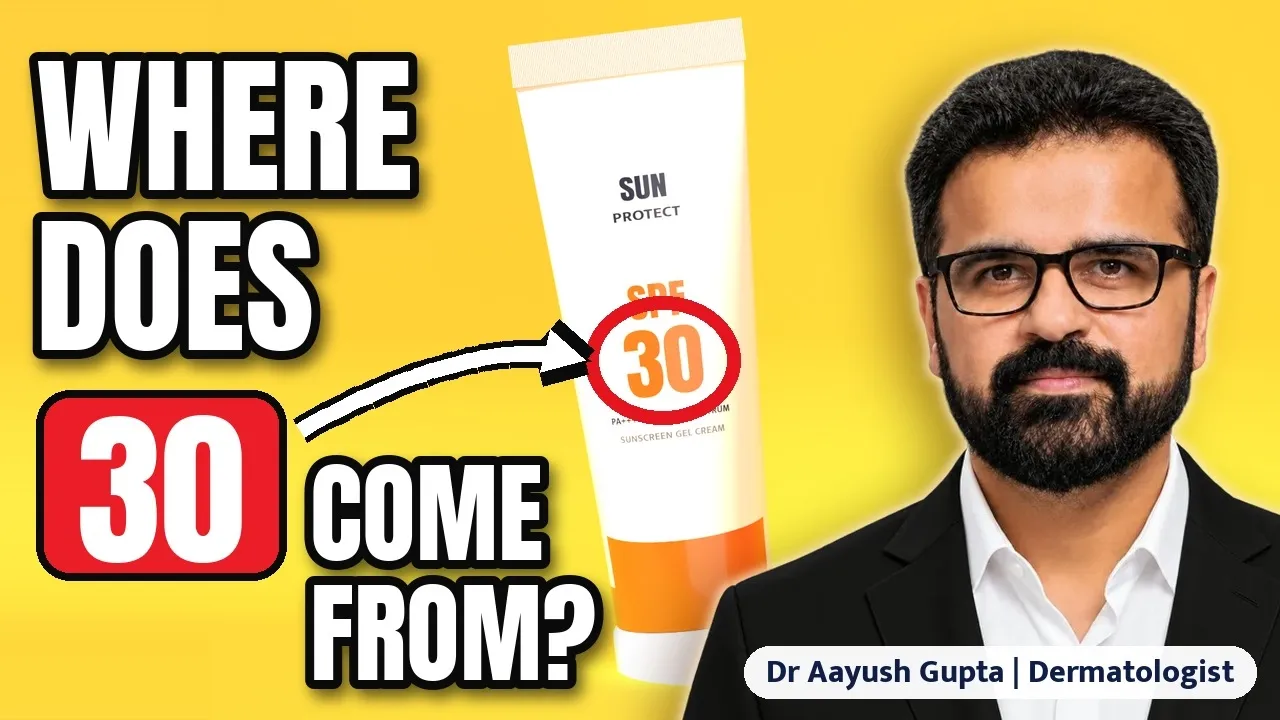
सनस्क्रीन वो अम्ब्रेला है जो धूप लगने से पहले ही खुल जाता है। सनस्क्रीन कितना बचाएगा, ये उसके SPF से पता चलता है, मतलब सन प्रोटेक्शन फ़ैक्टर। लैब में इसे ऐसे नापते हैं: पहले देखते हैं कि बिना सनस्क्रीन के, कितनी UV से स्किन हल्की सी लाल होती है, फिर सनस्क्रीन की मोटी लेयर लगाकर यही टेस्ट दोबारा करते हैं। अगर अब स्किन को लाल होने के लिए तीस गुना ज़्यादा UV चाहिए, तो उस सनस्क्रीन पर SPF 30 लिखा जाता है।
SPF 30 का मतलब है कि जलाने वाली तीस रेज़ में से सिर्फ़ एक अंदर पहुँचती है। सौ रेज़ में से SPF 15 लगभग सात अंदर आने देता है, SPF 30 लगभग तीन, और SPF 50 लगभग दो। एक बात और, SPF टाइम नहीं बताता, UV की डोज़ बताता है, और दोपहर की धूप वो डोज़ सुबह की धूप से कहीं जल्दी दे देती है।
SPF सिर्फ़ सनबर्न से बचाव बताता है, और सनबर्न ज़्यादातर UVB से होता है। UVA रेज़ स्किन में और गहराई तक जाती हैं और स्किन को डार्क करती हैं, इसलिए ट्यूब पर दूसरा निशान भी देखिए: PA के बाद वाले प्लस साइन, या ब्रॉड स्पेक्ट्रम।
अभी अपनी सनस्क्रीन उठाइए और ये दोनों निशान ढूँढिए। बस एक बात याद रखिए, उस पर लिखा हर नंबर उसी मोटी लेयर पर टेस्ट हुआ था, और ज़्यादातर लोग उसका आधा या उससे भी कम लगाते हैं। तो आपको अपने SPF का असल में कितना फ़ायदा मिल रहा है? ये अगली वीडियो में।
More explainers
General health education, not medical advice for any individual. Narration uses an AI voice; the script and animation are prepared with AI assistance, then checked and approved by Dr Gupta.